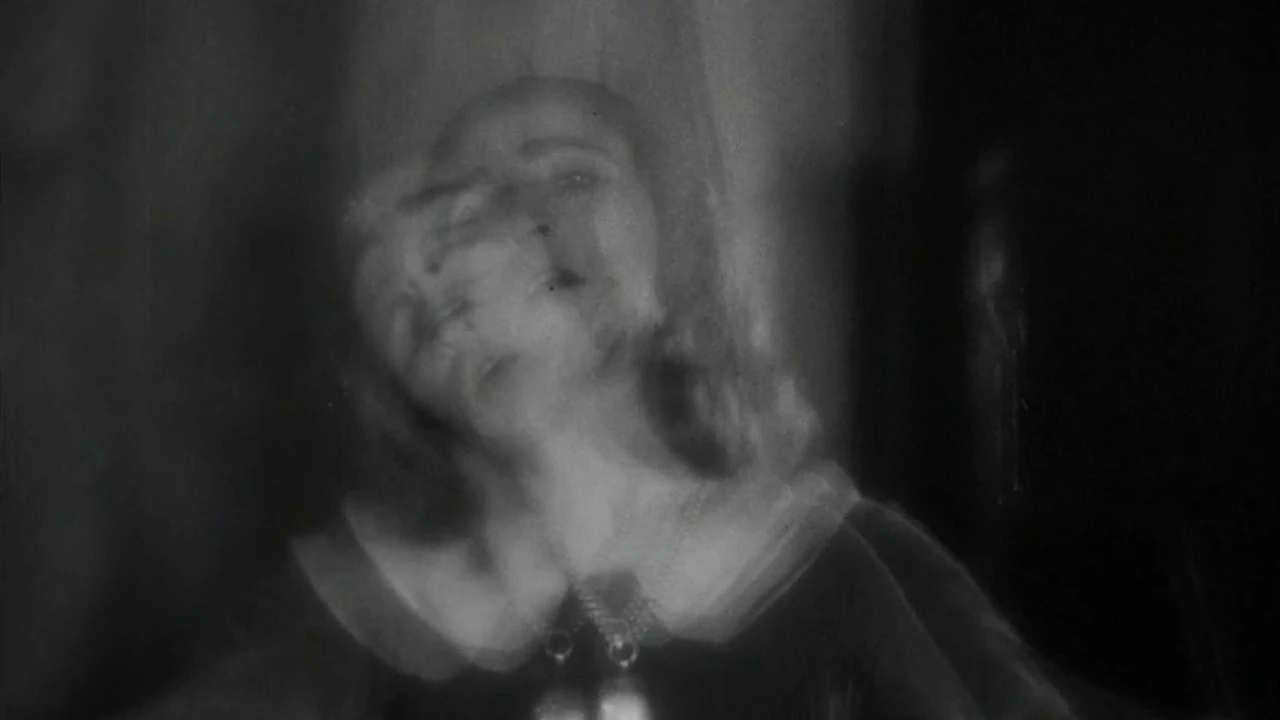
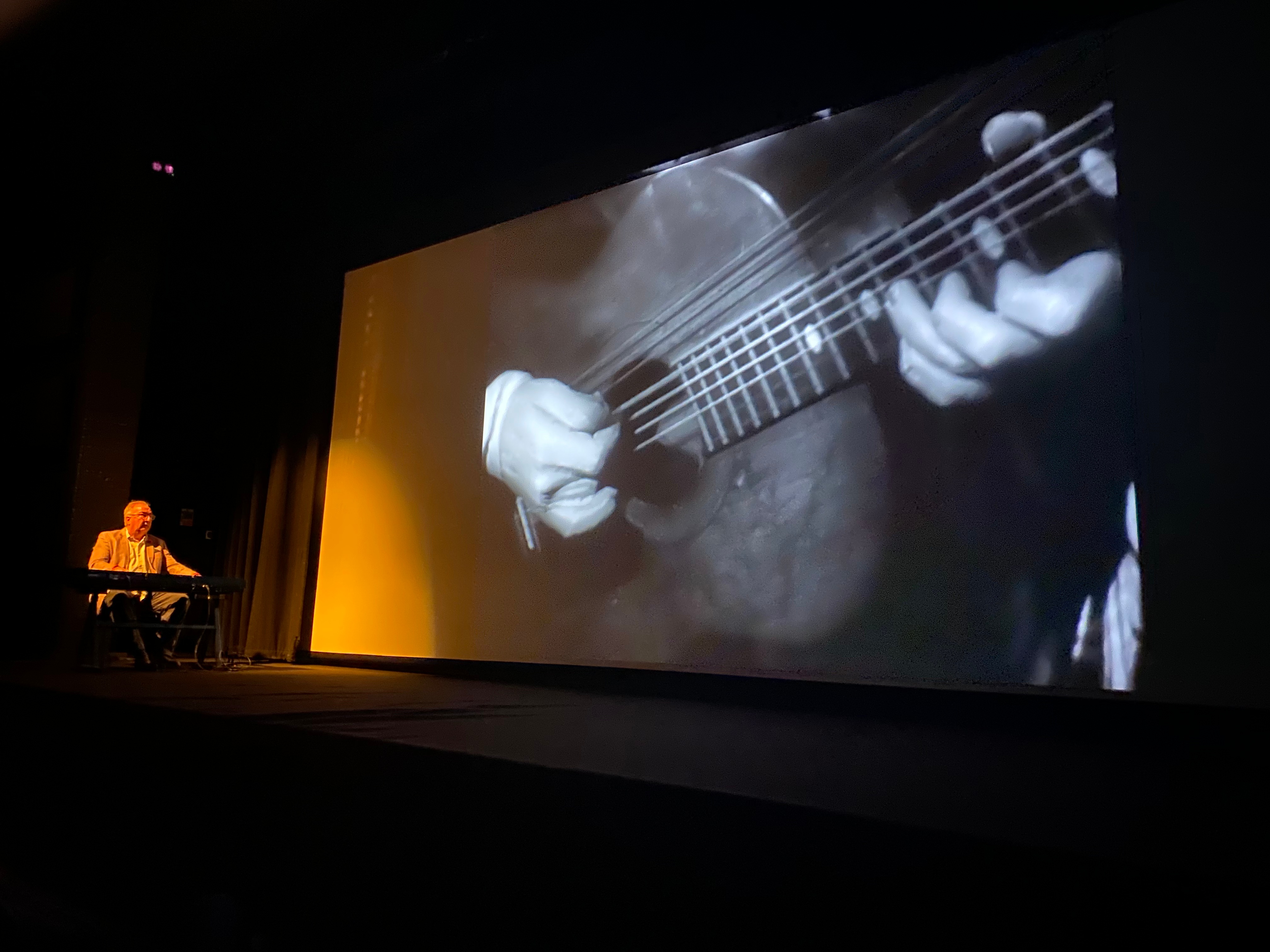
This was the introduction I gave for a screening of Epstein’s 1928 film at the Dukes cinema in Lancaster on 1/11/25, with live accompaniment by Neil Brand.
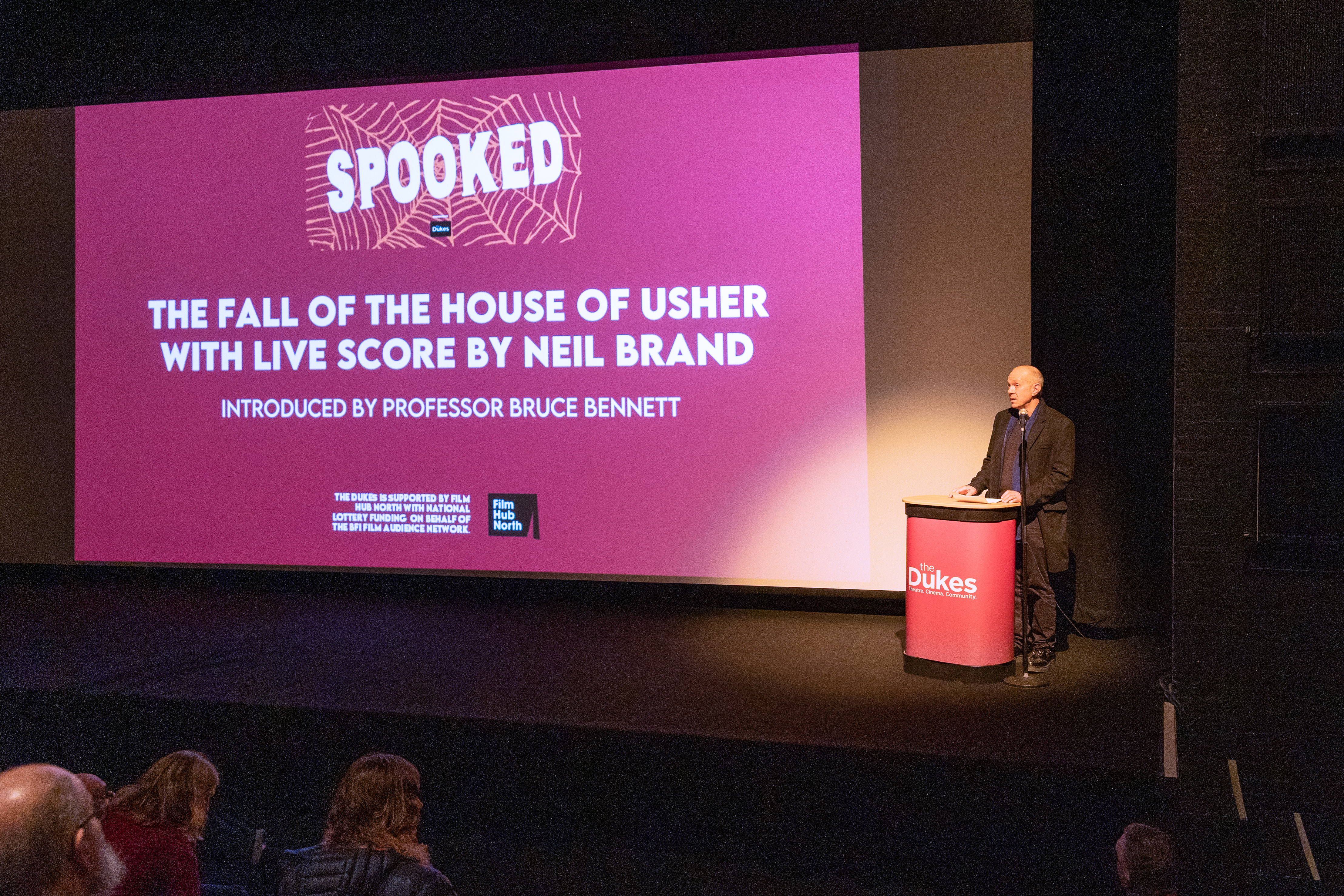
This film is an adaptation of the short story The Fall of the House of Usher by American writer Edgar Allan Poe that was published in 1839. There have been a number of film adaptations of this story, which is a foundational text for gothic literature and film, but it seems to have held particular interest for experimental film-makers. Curtis Harrington, the American queer underground filmmaker made a version as a teenager in the early 1940s, in which he played both Roderick Usher and his twin Madeline. Avant-garde Czech animator Jan Svankmajer produced a version in the early 1980s, and the last feature film by the wildly uneven British director Ken Russell was a very loose treatment of Poe’s story. Retitled The Fall of the Louse of Usher it is a chaotic home movie that has as much in common with Monty Python and The Rocky Horror Picture Show as it does with art cinema.
The Fall of the House of Usher is a simple story in which the narrator recounts receiving a letter from his childhood friend Roderick, demanding that he visit him at his ancestral home, since he is gravely ill, both physically and mentally. The narrator arrives to find a crumbling mansion in a swampy landscape, an environment that is overwhelmingly unhappy. When he enters Roderick’s room, he recalls, ‘I felt that I had breathed an atmosphere of sorrow. An air of stern, deep, and irredeemable gloom hung over and pervaded all’ (80). Poe’s story gives only the vaguest impressions of what the place looks like but a very powerful sense of what it feels like, so I think this may be what attracted film-makers to the material. In many genres of film, the space in which the action takes place is not just a neutral backdrop, but a symbolic field loaded with meaning, emotion or sentience – think, for example, about the way that buildings and landscapes in horror films function almost as if they are characters. Therefore, as a story about space saturated with emotion, The Fall of the House of Usher lends itself very well to cinema. The Czech film-maker Jan Svankmajer’s version of this story is a particularly clear example since in his adaptation there are no actors at all; the film consists of views of the house, the objects within it and details of the surrounding landscape.
This version, which was co-written with the surrealist film-maker Luis Bunuel, is the best-known film by Jean Epstein, a French director who was aligned in the 1920s with the impressionists, a group of experimental or avant-garde French filmmakers that included Jean Renoir and Abel Gance (who appears briefly in the opening scene of the film, while his wife Marguerite plays Madeline Usher, who is recast in this adaptation as Roderick Usher’s wife rather than his sister). Impressionist cinema was characterised by inventive, playful approaches to editing and camerawork, rejecting the increasingly dominant stylistic and narrative conventions of American cinema. These film-makers were concerned with establishing a cinema that was distinctively French, and their anxieties about the contaminating cultural influence and economic impact of American cinema were common in Europe in the 1920s. In Britain this led to the Cinematograph Films Act of 1928, imposing limits on US film imports, while in the Soviet Union the so-called ‘Lenin ratio’ of 1922 was the basis for a similar protectionist policy of restricting the volume of imported films. However, the impressionist directors were also inspired by a concept of cinema as a form of art that was equal to any other established art form. They proposed that rather than imitating other art forms like painting, literature and theatre, filmmakers should strive to explore the specific properties of cinema as a visual medium, to exploit the things film can do that other art forms can’t: principally, the manipulation of time and space.
Epstein was both a film-maker and a writer, and his literary and theoretical writing on cinema, some of it in the form of poetry, was very influential on French thought about film, although it’s not so well known outside France since not much of it was translated into English until relatively recently. One of the core concepts explored by Epstein in his writing is that of ‘photogénie’. As he declared in a lecture in 1923,
the cinema should avoid dealings, which can only be unfortunate, with historical, educational, novelistic, moral or immoral, geographical or documentary subjects. The cinema must seek to become, gradually and in the end uniquely, cinematic; to employ, in other words, only photogenic elements. Photogénie is the purest expression of cinema.
For Epstein this meant that cinema shouldn’t concern itself purely with storytelling, but in any case, as he argued, storytelling is a distortion since life isn’t experienced as narrative:
why tell stories, narratives which always assume a chronology, sequential events, a gradation in facts and feelings? […] There are no stories. There have never been stories. There are only situations, having neither head nor tail; without beginning, middle, or end, no right side or wrong side […] without limits in past or future, they are the present.
In practice, for Epstein, this didn’t mean abandoning storytelling entirely to concentrate on abstract, non-narrative experimental films, as some of his avant-garde contemporaries did, but instead it meant making beautiful, visually rich films that exploit cinema’s capacity to evoke other ways of being.
Epstein’s films use disorienting camera movement, slow motion, reverse motion, dynamic rhythmic editing, distorted and out-of-focus images, dramatic lighting effects, and multiple exposures where one or more shots are superimposed, and we see a number of these cinematic techniques at work in this film. They demonstrate the way that, for Epstein – and for a number of other writers and filmmakers from the period – the power of the film camera was that it can unlock a different way of seeing the world, opening up a new perspective on reality that other artforms can’t offer. As he wrote in 1921,
People talked of nature seen through a temperament, or of temperament seen through nature. But now there is a lens, a diaphragm, a dark room, an optical system. The artist is reduced to pressing a button […] The Bell and Howell is a metal brain, standardized, manufactured marketed in thousands of copies, which transforms the world outside it into art. The Bell and Howell is an artist, and only behind it are there other artists: director and cameraman.
For Epstein, the fact that a camera was a mass-produced machine did not mean that film was reduced to the status of a synthetic commercial product. On the contrary, this machine extended the senses of the artist, allowing them to perceive and experience nature with a level of detail, richness, and a degree of strangeness that a novelist or a painter could never hope to capture.
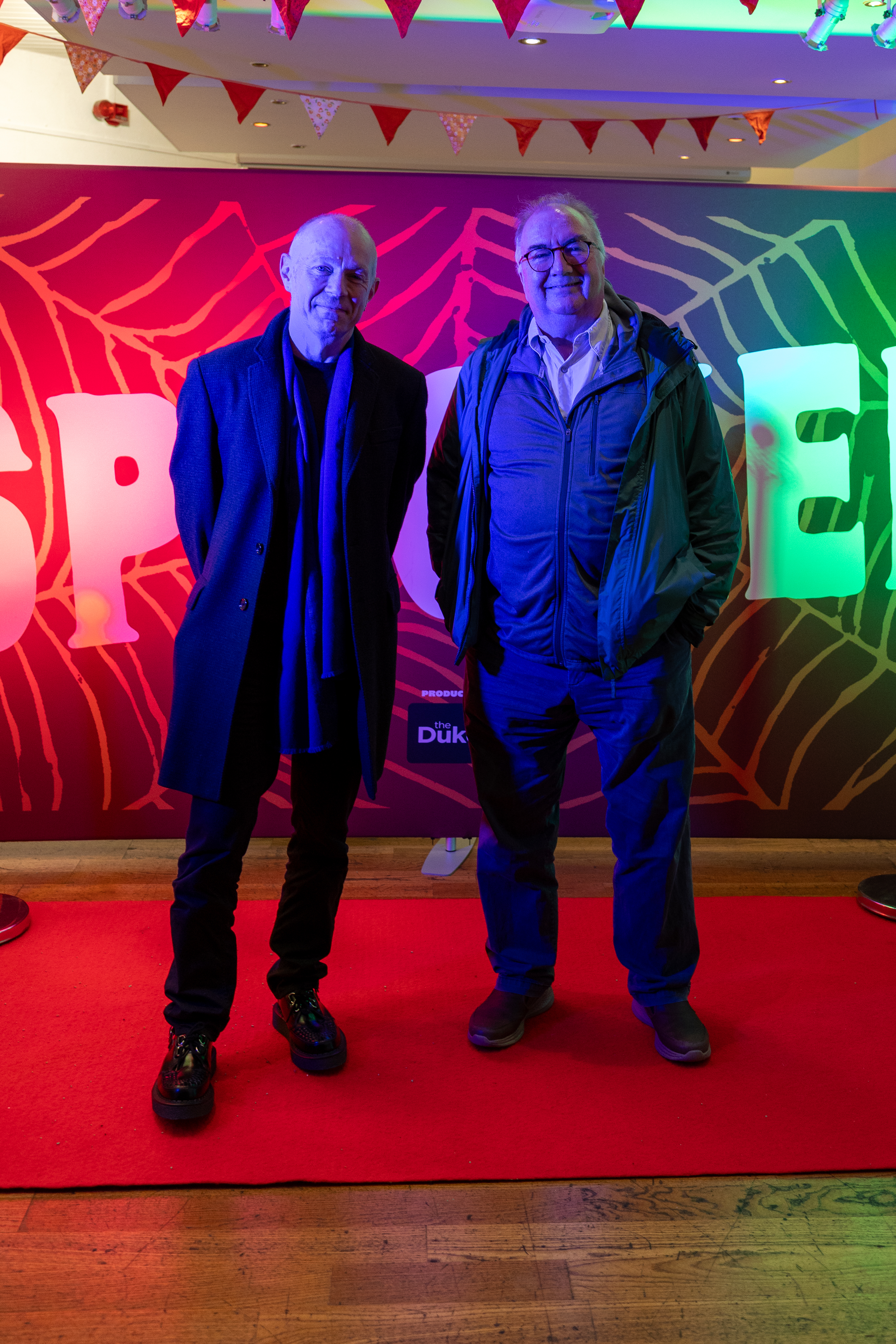
With Neil Brand after the screening. (pictures 2 and 4 by Joao Lima Belchior).
 Bruce Bennett