
In most cases the principal function of the music on a film soundtrack is to convey narrative information to the spectator. It constitutes a set of additional instructions for the viewer. It might indicate the emotion they should be feeling as they watch a particular sequence, or it might lead them to anticipate a certain event – think of the way that horror films use music to build suspense by indicating that something is about to happen. It might use repeated motifs to underscore the significance of certain characters, objects, places or lines of dialogue, or it might give us information about the historical setting of the narrative – Martin Scorsese’s initial intention to use the music of punk band The Clash for his 19th century period drama Gangs of New York might have resulting in a radically disorienting collision of sound and image, although he ultimately abandoned the idea. Music can also direct our reading of a film by giving us information about genre – think about how electronic music has been associated with science fiction since Forbidden Planet (1956), or how an electric guitar arpeggio and a jaw harp twang tell us immediately that we are watching an Italian Western.
Of course, most of the time film music is also designed not to be too noticeable, the assumption being that if the spectator pays too much attention to the music (or to any other formal component of the film) it will interfere with the spectator’s absorption in the story. When film music is peeled away from the images it accompanies, and from the other layers of the sound mix, it can sometimes sound very different from music that is designed to be heard independently. It is often fragmentary and places a great deal of emphasis on texture, perhaps blurring the boundary between music and noise. While film scores often have to be completed very quickly towards the end of the postproduction phase, the fact that much of the score may end up being discarded by the filmmaker when they edit their film, and also the fact that what is retained may well not be especially prominent in the sound mix, it gives composers a certain freedom to experiment. Indeed, the fact that film music is conventionally expected not to be too prominent may actually encourage some defiant composers to make more attention-grabbing music to ensure their work is audible. The consequence is that the scores of even mainstream Hollywood productions can contain striking echoes of the most formally radical avant-garde music that are only audible when it is listened to as music in its own right. And of course – as is the case with the score for the science fiction sequel Tron: Ares by Nine Inch Nails – in some cases the music has a richness, subtlety and suggestiveness that far exceeds that of the film into which it’s incorporated.
I was asked by tireless community arts organiser Steve Fairclough to do a vinyl DJ set last month for a party to mark the tenth anniversary of his Lancaster-based film festival LA1 Shorts. This took place at Lancaster’s wonderful ‘Forty-Five’ records, where I had done an ‘open decks’ vinyl DJ session one afternoon last year that also focused on film music, but this time I took the opportunity to put together a rather more expansive set.
There are a couple of tracks here – ‘Sanctus’ and ‘Perpetuum Mobile’ – that were appropriated rather than composed for the films they appear in, and of course, Lalo Schifrin’s disco-funk version of the Jaws theme is an adaptation of the original, but it was just too good to leave out. The evening was a pure joy and I hope we have a chance to do another.
- Pink Floyd, ‘Obscured by Clouds’ – La Vallée (Barbet Schroeder, 1972)
- Brad Fiedel, ‘The Terminator Theme’ – The Terminator (James Cameron, 1984)
- John Barry Seven, ‘James Bond Theme’ – Dr No (Terence Young, 1968)
- Davie Allan and the Arrows, ‘Blues Theme’ – The Wild Angels (Roger Corman, 1966)
- Henry Mancini, ‘Theme from Peter Gunn’ – Gunn (Blake Edwards, 1967)
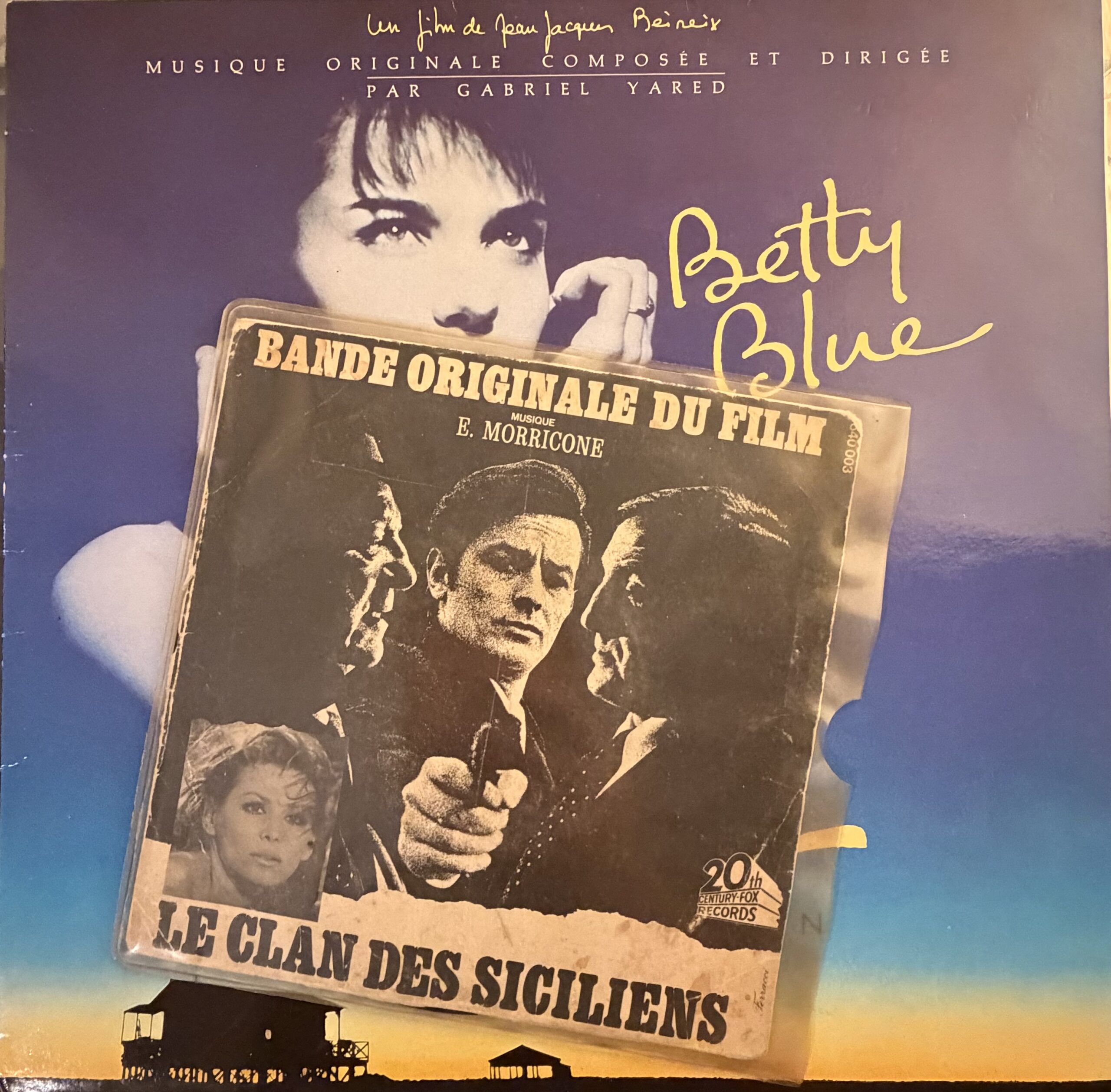
- Ennio Morricone, ‘Dialogo no. 2’ – The Sicilian Clan (Henri Verneuil, 1969)
- Philip Glass, ‘Osamu’s Theme: Kyoko’s House’ – Mishima: A Life in Four Chapters (Paul Schrader, 1985)
- Penguin Café Orchestra, ‘Perpetuum Mobile’ – Napoleon Dynamite (Jared Hess, 2004)
- Franck Barcellini, ‘Mon Oncle’ – Mon Oncle (Jacques Tati, 1958)
- Gabriel Yared, ‘C’est le Vent, Betty’ – Betty Blue (Jean-Jacques Beneix, 1986)
- Eric Serra, ‘Congabass’ – Subway (Luc Besson, 1985)
- Nine Inch Nails, ‘Infiltrator’ – Tron: Ares (Joachim Ronning, 2025)
- New Order, ‘Salvation Theme’ – Salvation! (Beth B, 1987)
- John Williams, ‘Cantina Band’ – Star Wars (George Lucas, 1977)
- Michael Nyman, ‘An Eye for Optical Theory’ – The Draughtsman’s Contract (Peter Greenaway, 1982)
- Lalo Schifrin ‘Bullitt Main Title’ – Bullitt (Peter Yates, 1968)
- Elmer Bernstein, ‘The Great Escape Main Title’ – The Great Escape (John Sturges, 1963)
- Wendy Carlos, ‘March from A Clockwork Orange’ – A Clockwork Orange (Stanley Kubrick, 1971)
- Ilaiyaraaja, KS Chithra, ’Yaaro Sonnaangalaam’ – unreleased Tamil film
- Isaac Hayes, ‘Theme from Shaft’ – Shaft (Gordon Parks, 1971)
- Lalo Schifrin, ‘Jaws’ (1976)
- Ry Cooder, ‘Get Away’ – Performance (Nicolas Roeg, Domald Cammell, 1970)
- Mike Oldfield, ‘Etude’ – The Killing Fields (Roland Joffé, 1984)
- Les Troubadours du Roi Badouin, ‘Sanctus’ – If…. (Lindsay Anderson, 1968)
- Ennio Morricone, ‘Navajo Joe’ – Navajo Joe (Sergio Corbucci, 1966)
- Ennio Morricone, ‘La Prima Volta’ – I Malamondo (Paolo Cavara, 1964)
- John Carpenter and Alan Howarth, ‘Escape from New York Main Title’ – Escape from New York (John Carpenter, 1981)
- Harold Faltermeyer, ‘Axel F’ – Beverly Hills Cop (Martin Brest, 1984)
- Ryuichi Sakamoto, ‘Merry Christmas, Mr Lawrence’ – Merry Christmas, Mr Lawrence (Nagisa Oshima, 1983)
- Max Richter, ‘Portraits’ – Never Look Away (Florian Henckel von Donnersmarck, 2018)
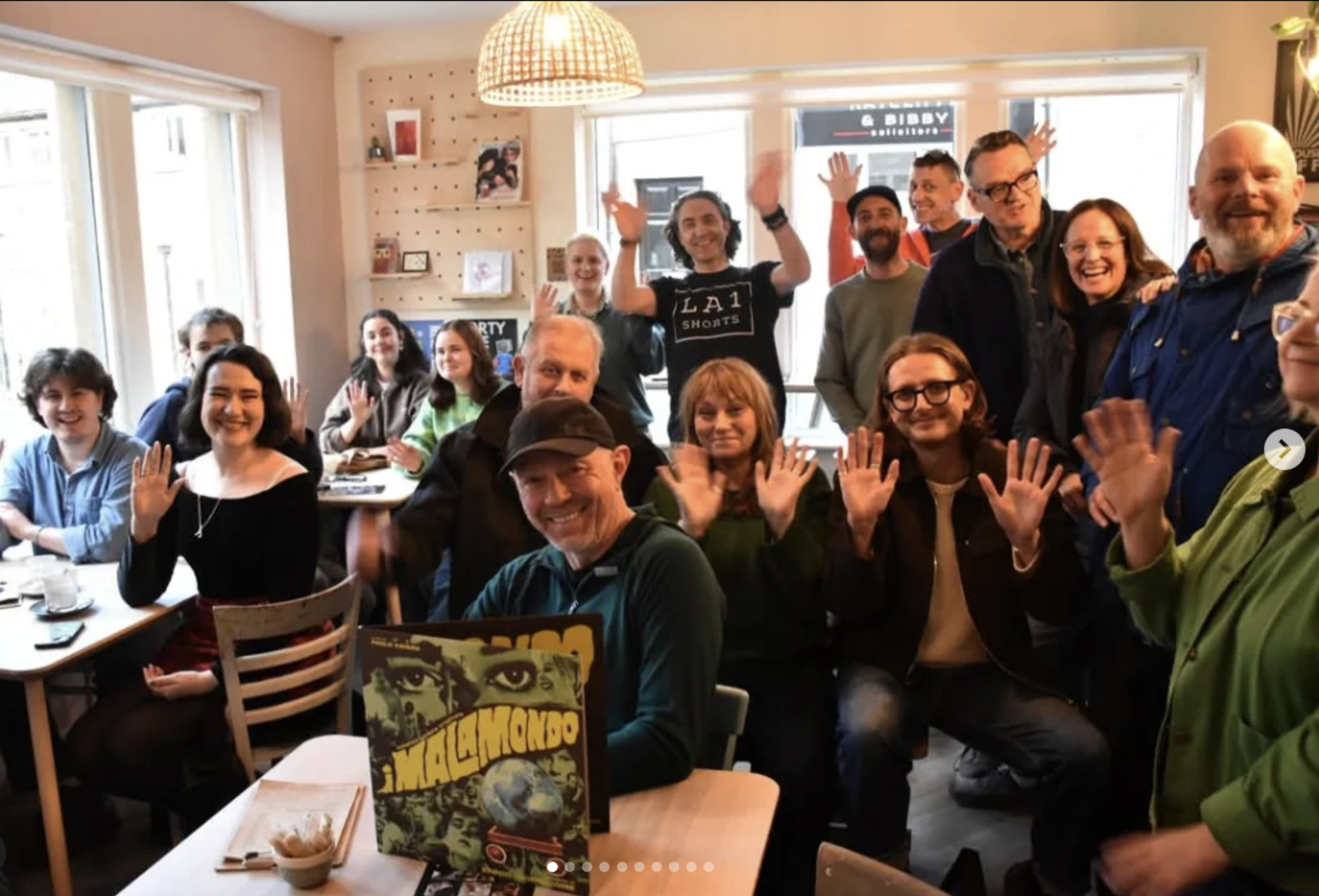
Photography courtesy of Darren Andrews.